
A clip has been circulating showing economist Richard Wolff describing Panama Canal transit fees jumping from roughly $55,000 to "5 million-plus" — a hundredfold increase — tied directly to the war disrupting the Strait of Hormuz. We checked the numbers against the Panama Canal Authority's own statements and multiple independent outlets. They hold up. Here's the full documented picture, including a new record set just weeks ago.
Bar heights scaled for visual readability, not strictly linear — exact dollar figures labeled on each bar. Sources: Panama Canal Authority, AFP, Bloomberg, Euronews, gCaptain.
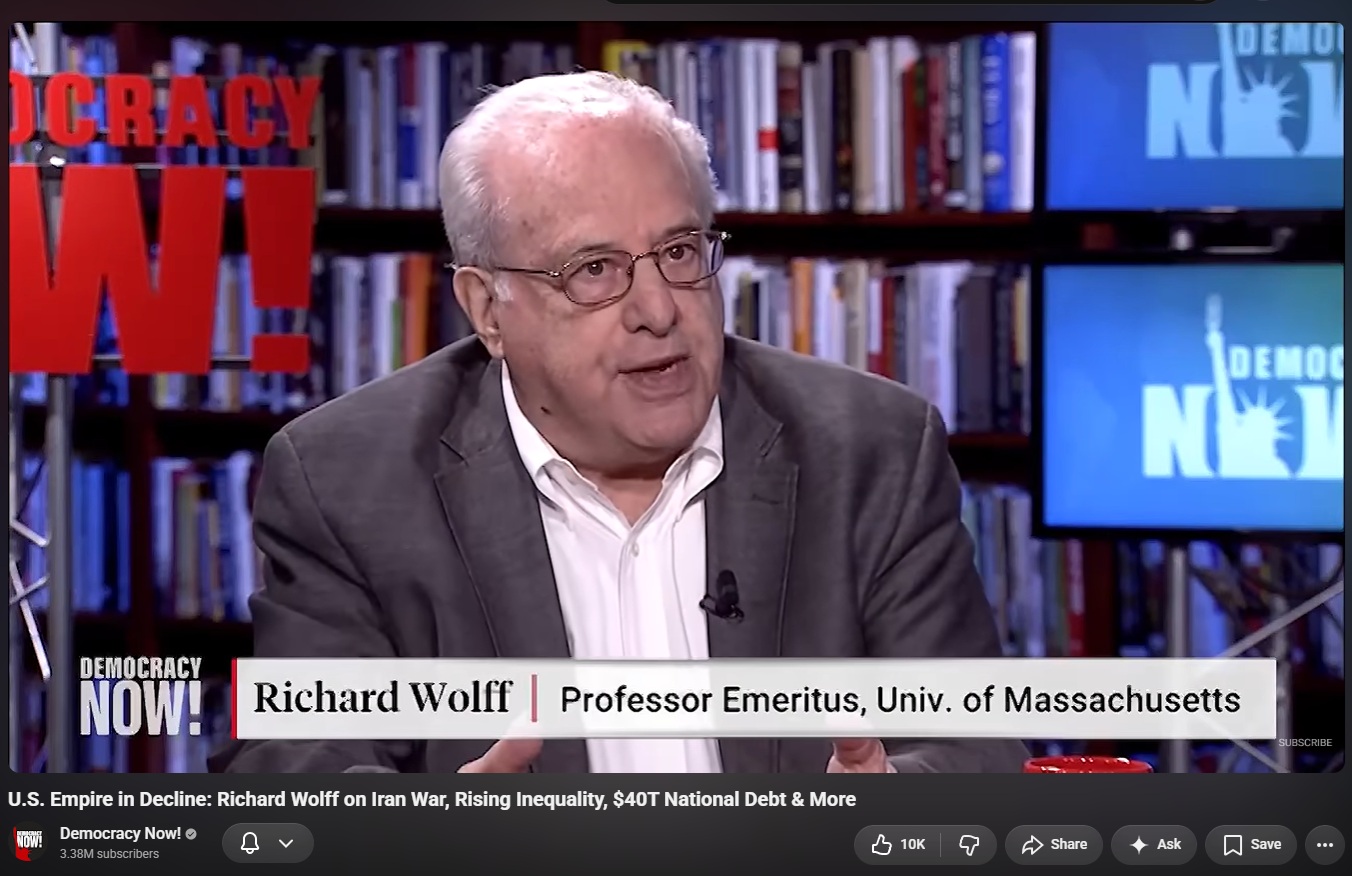
Professor Richard Wolff on Democracy Now! — "U.S. Empire in Decline: Richard Wolff on Iran War, Rising Inequality, $40T National Debt & More," the clip that prompted this fact-check.
What's Actually Driving the Surge
Two separate crises are converging on the canal at the same time — not one:
- The Strait of Hormuz has been effectively closed to large commercial vessels since late February 2026, following the outbreak of war between the US, Israel, and Iran. The strait normally carries roughly 20% of the world's oil and close to a fifth of its LNG.
- Asian buyers of crude and petroleum products pivoted to US Gulf Coast suppliers — and the Panama Canal is the shortest route between the Gulf and Asia, so tanker traffic through the canal spiked.
- A worsening El Niño has independently lowered water levels in Gatun Lake, the canal's main reservoir, restricting how much cargo ships can carry and how many vessels the canal can process — a capacity problem layered directly on top of the demand spike.
On April 22, 2026, Iran seized the Panama-flagged container ship MSC Francesca near Hormuz — a real, confirmed incident that further pushed shipping lines toward the Panama route rather than risk transiting the Gulf.
Reporting from Panama specifically names consumer electronics, grain, and auto parts among the cargo being rerouted, delayed, or resourced from different countries entirely to avoid transiting near Iran's coastline — this isn't limited to oil tankers.
Fact-Checking the Viral Numbers
Cable news numbers often get rounded for effect — so we checked. In this case, they didn't need to be:
| Claim in the clip | What's actually verified |
|---|---|
| "$55,000" pre-war baseline | Confirmed — the Panama Canal Authority's own stated average auction price, October 2025–February 2026 |
| "5 million-plus" current cost | Confirmed — SK Gas paid a record $5.3 million on September 1, 2026, per the Canal's Deputy Administrator |
| "100 times larger" | Confirmed — $55,000 to $5.3 million is a ~96x increase, essentially exactly what was described |
Live TV commentary often rounds numbers up for dramatic effect, so the figures deserved a second look before repeating them.
Every figure matches the Panama Canal Authority's own confirmed statements. The story wasn't exaggerated — if anything, the surge has kept accelerating since.
What This Means for Importers
Shipping lines including major carriers have already imposed new surcharges tied to this surge, and those costs flow directly into freight quotes — whether or not a specific shipment physically transits the Panama Canal. Vessel repositioning, schedule delays, and route changes ripple across ocean freight capacity broadly, not just on Panama-routed cargo.
For importers sourcing from Asia to the US East Coast, or moving goods that would normally transit near the Middle East, this is a live, ongoing cost factor — not a one-time spike that's already resolved. The Canal Authority has confirmed daily transits will drop from 36 to 34 starting September 3, and to 32 later in the month, as Panama's El Niño emergency deepens. Fewer available slots means more competition for the ones that remain — pointing toward further cost pressure, not relief.
What You Will Be Able To Do After Reading This
- Understand the two separate, compounding causes behind the Panama Canal cost surge — not just "the war"
- See the real, sourced dollar figures behind the viral claim, and how they differ from what was said on TV
- Know which cargo categories are specifically affected by the rerouting, beyond oil tankers
- Recognize this as an ongoing cost factor tied to ocean freight quotes broadly, not a resolved, one-time event
How Canal Surcharges Affect Your Ocean Freight Quote
Whatever the current headline figure is at the time you're reading this, the mechanism stays the same: when Panama Canal transit costs rise — whether from a temporary crisis or a seasonal water-level shortage — ocean carriers pass that cost forward as a surcharge on affected trade lanes. This applies broadly, not narrowly:
- General Rate Increases (GRIs) on lanes that route through or near the canal, even for cargo on vessels not directly queued at the locks
- Bunker and emergency surcharges tied to vessel repositioning, as carriers reroute ships to avoid the worst congestion
- Schedule reliability impact — longer transit times and missed connections that compound cost through demurrage and detention exposure
For importers, the practical takeaway is to treat canal-related surcharges as a recurring line item to monitor on every quote from an Asia-to-East-Coast or Gulf-routed lane — not a one-time cost that resolves once a specific news cycle ends.
Wondering how this affects your ocean freight costs?
Accrue can help you plan routing and timing around current surcharges and capacity constraints.
Talk to Us →Frequently Asked Questions
What is a Panama Canal auction premium?
A Panama Canal auction premium is an additional fee shipping lines pay to skip the standard transit queue and secure priority passage through the canal. It is separate from the base transit toll and is set through a competitive bidding process, with prices rising sharply when demand for priority slots increases.
How do Panama Canal surcharges affect ocean freight rates?
When canal transit costs rise, shipping lines pass the added cost to customers through freight surcharges, which apply broadly across affected trade lanes rather than only to cargo physically transiting the canal. Vessel repositioning and schedule changes caused by canal congestion also ripple into ocean freight capacity and pricing more broadly.
Why do Panama Canal transit costs fluctuate so much?
Panama Canal transit costs fluctuate based on two main factors: water levels in Gatun Lake, which determine how much cargo vessels can carry and how many ships the canal can process, and demand from shipping lines rerouting around disruptions elsewhere, such as closures or conflicts affecting other major shipping corridors.
What cargo is most affected by Panama Canal cost increases?
Reporting on Panama Canal cost surges has specifically named consumer electronics, grain, and auto parts as cargo categories affected by rerouting, delays, and increased freight costs, in addition to the oil and gas tankers most commonly associated with canal transit disruptions.
Is the Panama Canal cost surge a temporary or ongoing issue?
As of the most recent reporting, Panama Canal cost pressure is ongoing rather than resolved. El Niño-driven water level declines are expected to continue independent of any other disruptions, meaning capacity constraints and elevated transit costs are likely to persist as a live factor in ocean freight planning.